Legacy of Dead Game Integration Costs for UK Platforms
Legacy of Dead Game Integration Costs for UK Platforms

For UK online casino businesses and platform suppliers, adding a well-known slot like Legacy of Dead is a strategic decision that hinges on a precise understanding of related costs. The process is far from a simple plug-and-play affair; it involves managing a intricate landscape of technological development, legal compliance, and commercial agreements. The total expenditure for bringing this acclaimed Play’n GO title to a platform can vary significantly, affected by factors spanning from the selected integration method and the platform’s present infrastructure to the size of the operation and the particular terms arranged with the game provider. This article provides a detailed, objective analysis of the different cost components associated in adding the Legacy of Dead slot onto UK-facing platforms. It aims to supply business decision-makers with the monetary insights required to budget efficiently, ensuring a flawless and lucrative addition to their gaming portfolio while complying to the rigorous requirements of the UK Gambling Commission.
Understanding Integration Methods and Their Cost Implications
The key factor influencing the complete cost of integrating Legacy of Dead is the method chosen for the task. Overall, platforms have three main avenues, each with different financial and operational implications. The initial is direct integration via an Application Programming Interface (API) offered by Play’n GO. This method provides the most control and possibility for a customised user experience but is generally the most costly and time-consuming. It necessitates a dedicated in-house or contracted development team to handle the technical implementation, rigorous testing, and continual maintenance, leading to considerable upfront and recurring labour costs. The subsequent, and most prevalent for smaller to mid-sized operators, is integration through a third-party game aggregator. These aggregators act as intermediaries, presenting a catalogue of games from multiple providers, like Play’n GO, through a single, unified API. This approach drastically reduces development complexity and cost, as the platform just needs to integrate one time with the aggregator’s system. However, it often involves revenue-sharing agreements or increased transactional fees, which can affect long-term profitability. The third method is using a white-label or turnkey casino solution, where the Legacy of Dead slot is incorporated as component of a pre-packaged platform. Here, integration costs are bundled into the comprehensive licensing fee for the solution, offering the lowest technical barrier but the least brand and operational independence.
Influence of Platform Size and Present Infrastructure
The scale and technological advancement of the integrating platform are essential cost determinants. A major, established UK operator with a proprietary, sophisticated platform may experience lower relative integration costs for a particular slot like Legacy of Dead, as they probably have an experienced development team and robust, adaptable systems already in place. Their cost is mainly the labour for the specific task and the commercial terms with Play’n GO or an aggregator. Conversely, a new market entrant or a smaller platform building from scratch will meet significantly higher costs. They must invest in the core platform infrastructure able of supporting modern HTML5 slots, which includes secure payment gateways, player verification systems, and responsible gambling tools—all UKGC requirements—before even contemplating game-specific integration. For such operators, the aggregator or white-label route often offers a more viable financial model, despite the long-term trade-offs in revenue share. The complexity grows if the platform operates across multiple jurisdictions, as additional work may be necessary to geolocate the game and manage different regulatory requirements, even if the immediate focus is the UK.
Analysis of Main Cost Components

Aside from the comprehensive integration method, the total cost is comprised of several discrete components. A meticulous budget must account for each to prevent unforeseen expenses. The most significant initial outlay is typically development labour. This includes the man-hours required for software engineers to integrate the game’s API, verify it communicates correctly with the platform’s wallet, user database, and backend systems, and passes the stringent security audits mandated for UK operators. A additional major component is licensing and royalty fees. Play’n GO, as the developer, will demand a commercial agreement that commonly involves a revenue share model, where a percentage of the net gaming revenue (NGR) generated by Legacy of Dead is paid to them. Alternatively, some agreements may include a fixed fee or a cost-per-player model. Thirdly, compliance and testing costs are essential in the UK market. Every integrated game must undergo independent testing by a UKGC-approved body (like eCOGRA or iTech Labs) to confirm its fairness, randomness, and compliance with technical standards. This testing incurs direct fees. Moreover, ongoing costs include platform maintenance, server hosting for the game content, crunchbase.com customer support training specific to the title, and potential marketing expenditures to advertise the new addition to the player base.
Regulatory Compliance: A Mandatory Cost Factor
In the United Kingdom, regulatory adherence https://en.wikipedia.org/wiki/Middlesbrough_F.C. is not a secondary concern but a core and significant element of any game integration. The UK Gambling Commission enforces some of the world’s strictest rules, and failure to adhere can lead to severe penalties or licence revocation. The integration of Legacy of Dead must, therefore, incorporate several compliance-specific features from the outset. This involves seamless connectivity with national self-exclusion schemes like GAMSTOP, stringent age and identity verification processes before a player can access real-money play, and the implementation of mandatory responsible gambling tools such as deposit limits and reality checks. Implementing these features increases development time and cost. Furthermore, all game mechanics—including its Return to Player (RTP) percentage, random number generator (RNG), and bonus round behaviour—must be validated by a UKGC-approved testing house. This certification process involves fees and can result in project delays. Ongoing compliance costs also cover regular audits and potential updates to the game or its integration to meet changing regulatory standards, such as those concerning more transparent financial risk warnings or tighter affordability checks.
Ongoing Operational and Maintenance Expenses
The investment to hosting Legacy of Dead reaches beyond the initial launch. Ongoing operational and maintenance expenses represent a significant part of the total cost of ownership. These recurring costs guarantee the game remains available, secure, and profitable. A primary expense is server hosting and content delivery network (CDN) fees. The high-quality graphics, sounds, and software of Legacy of Dead must be delivered to players with minimal latency, necessitating robust, scalable hosting solutions, often charged on a monthly or usage basis. Secondly, technical maintenance is continuous. This includes:
- Supervising game performance and uptime to ensure 99.9%+ availability.
- Applying security patches and updates provided by Play’n GO or the aggregator to protect against vulnerabilities.
- Ensuring compatibility with new versions of web browsers and mobile operating systems (iOS, Android).
- Resolving and resolving any player-reported issues related to game functionality or payment processing.
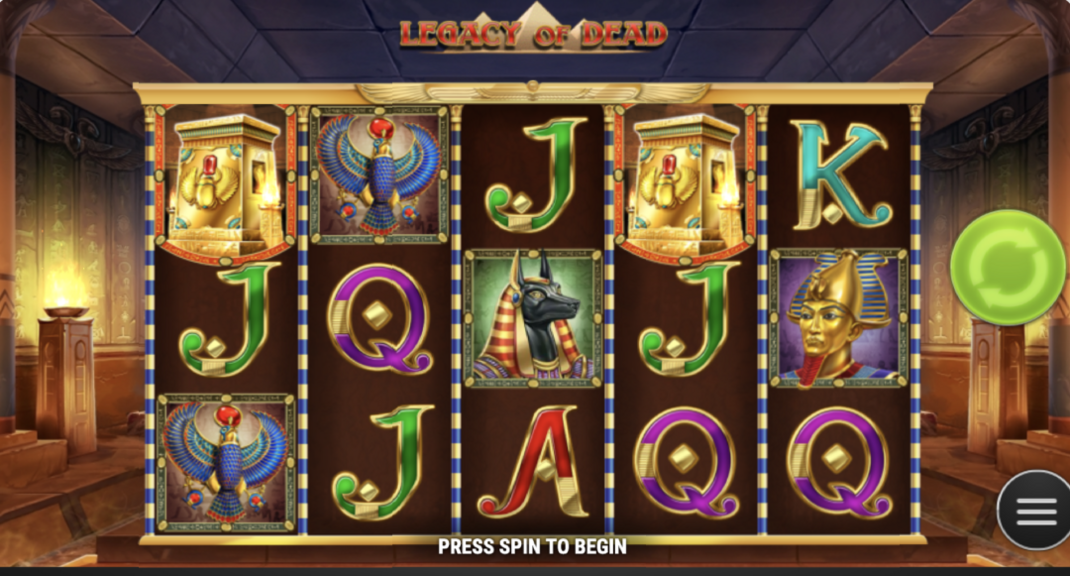
This maintenance demands either an internal technical team or a retainer with a third-party support service. Additionally, customer support teams must be educated to handle queries specific to Legacy of Dead, such as bonus round rules or perceived game issues, posing an indirect labour cost. Finally, commercial fees like the revenue share with the provider or transactional fees to an aggregator are perpetual costs directly tied to the game’s success.
Unexpected Charges and Possible Monetary Traps
Prudent budgeting for game integration needs to consider potential unexpected charges and economic risks that can bloat the total investment. One frequent mistake is the cost of delays. If integration takes longer than projected due to technical obstacles or slow licensing steps, the additional work time and missed revenue opportunity constitute a significant hidden cost. Another risk involves growth capacity. A platform might incorporate Legacy of Dead effectively at a low initial player volume, but a sudden increase in users—perhaps fueled by a marketing campaign—could reveal inadequate server capacity or technical limitations, demanding urgent and expensive infrastructure improvements. Furthermore, shifts in legal requirements can impose unexpected costs. A new UKGC directive might require a fundamental change to how the game communicates with player accounts or displays warnings, sparking a round of re-development and re-testing. Finally, commercial agreement details can harbour hidden clauses. Minimum monthly fees, charges for player migrations, or fees for using new game features (like tournament modes) can all surface after the initial contract is signed, influencing long-term profitability. A meticulous due diligence process during contract negotiation is essential to minimize these risks.
Cost-Benefit Evaluation and Investment Return (ROI)
In the end, the move to incorporate Legacy of Dead must be backed by a positive return on investment. A detailed cost-benefit analysis balances the overall integration and operational costs compared to the projected financial and strategic benefits. From a financial standpoint, the main benefit is the net gaming revenue generated directly from the slot. Legacy of Dead’s high popularity, engaging theme, and bonus features typically lead to strong player engagement and steady revenue streams. On a strategic level, adding such a premium title improves the platform’s overall game portfolio, making it more attractive to new players. It can aid reduce player churn and enhance customer lifetime value. To determine a realistic ROI, platforms must estimate player acquisition costs, forecast gameplay volume, and consider the revenue share percentage. The break-even point will differ; a big platform might handle the costs quickly through its extensive user base, while a specialized platform might face a longer horizon. The analysis should also consider qualitative benefits like brand enhancement from providing a market-leading product and the chance for cross-selling players to other games on the platform when they are active.
Incorporating the Slot Legacy Of Dead Information onto a UK platform is a multi-layered investment with costs encompassing initial technical development, regulatory compliance, licensing, and ongoing operations. The total expenditure is extremely flexible, influenced chiefly by the preferred integration method, the platform’s existing scale and infrastructure, and the strict demands of the UK regulatory environment. While direct integration provides control and aggregator models reduce upfront cost, all paths incur significant, recurring expenses for maintenance and revenue sharing. A profitable integration, consequently, relies on thorough planning, a comprehensive understanding of both obvious and hidden costs, and a clear-eyed analysis of the projected return on investment. For UK operators, handling this financial landscape diligently is the key to achieving the value of this popular title while maintaining a lawful and lucrative operation.